Alyn reads where the work is drifting from the priorities you set and gives you one weekly read, with the blind spot flagged, so you can course-correct while it is still cheap to fix.
 Alyn weekly readFriday, 8:00 AM
Task tools track work. OKR tools track goals. Alyn shows whether the work your team is doing is actually driving those goals, week by week.
It is a leading indicator built on real behavior, not a lagging, self-reported survey. And it lives where the work already happens, in Slack, so no one fills out another form. Teams is next, and it lands before a pilot started today would finish.
Your company priorities, each with a leading read of whether the work is actually moving, and the blind spot flagged, in one message you can act on.
You already know what is off track before the meeting, so the time goes to unblocking, not reporting.
I dropped the Monday status meeting. I already know what's off track before we'd have sat down.
COO, ~200-person fintech
Catch drift in behavior months before it lands in the numbers, while it is still cheap to fix.
Monday, managers set each person's priorities, each with one line saying what done looks like. Thursday, each person takes a few minutes to say what actually moved. Both happen in Slack. No new tools, no new meetings. Microsoft Teams is on the way.
Work, priorities, and blockers are connected to the goals leadership set, and the drift is surfaced weekly, by team and by goal.
You see where the work is drifting, where to step in, and where to stay out of the way, while it is still cheap to fix.
Monday is the real ask: setting the week for each person, with one line describing what done looks like. It is the heaviest part of Alyn and it is where most of the value is made, because a week that was never defined cannot be measured against. Thursday takes each person a few minutes. Nothing else is asked of anyone.
One message, every Friday. Your company priorities, each with a leading read and a hook. The blind spot, a stated priority with no team reporting on it, is the card that earns its keep.
Alyn weekly readFriday, 8:00 AMThe first digest flagged a priority we'd all assumed someone else owned. Turned out nobody did.
CEO, Series B SaaS
The weekly digest lands in Slack. Every card opens a full briefing: what is happening, why, and your call.
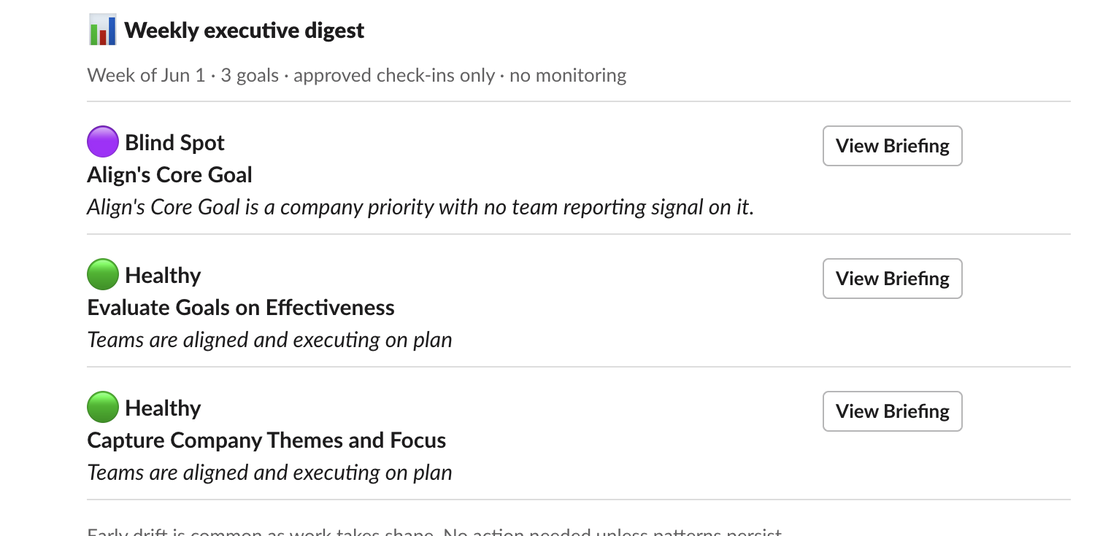
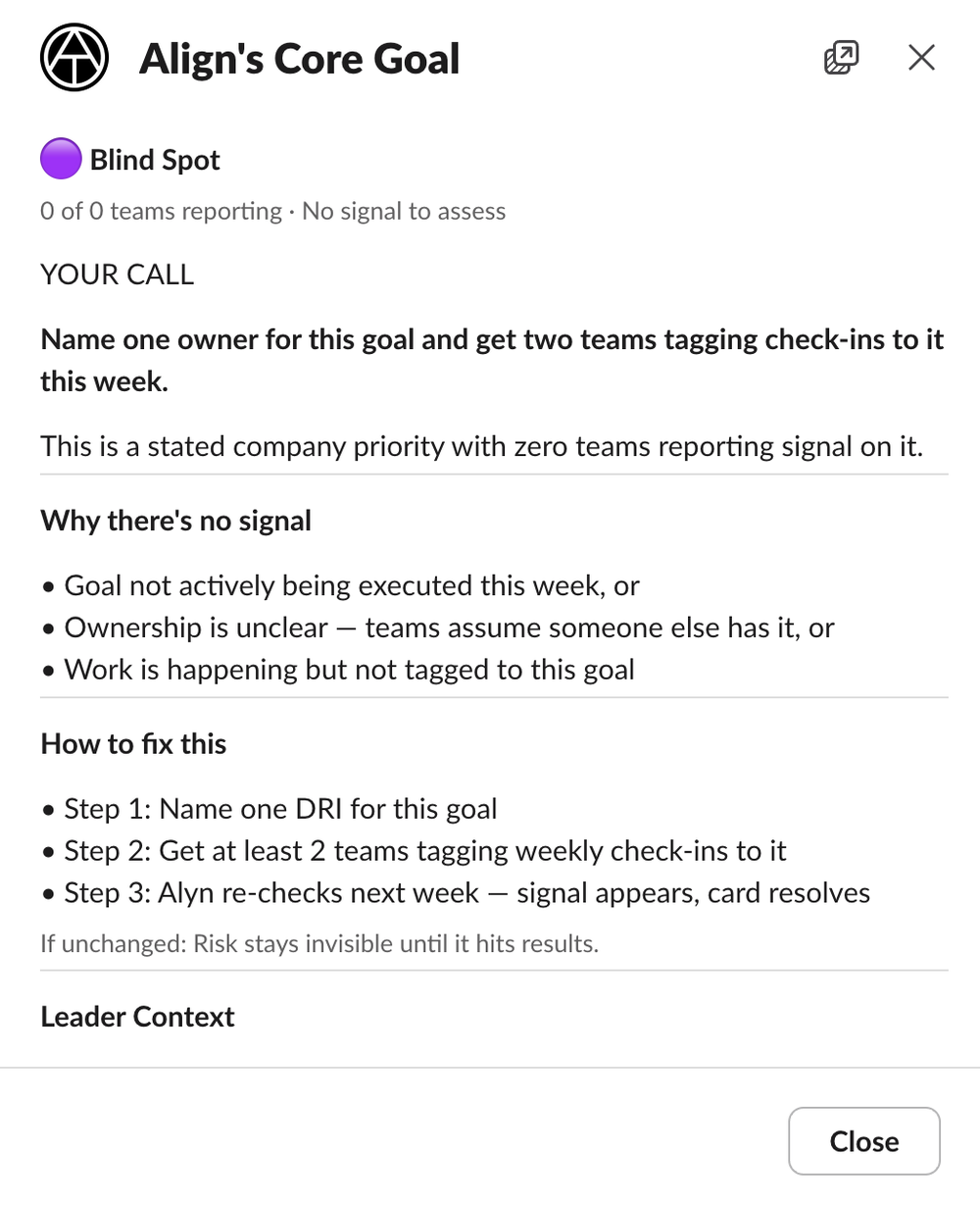
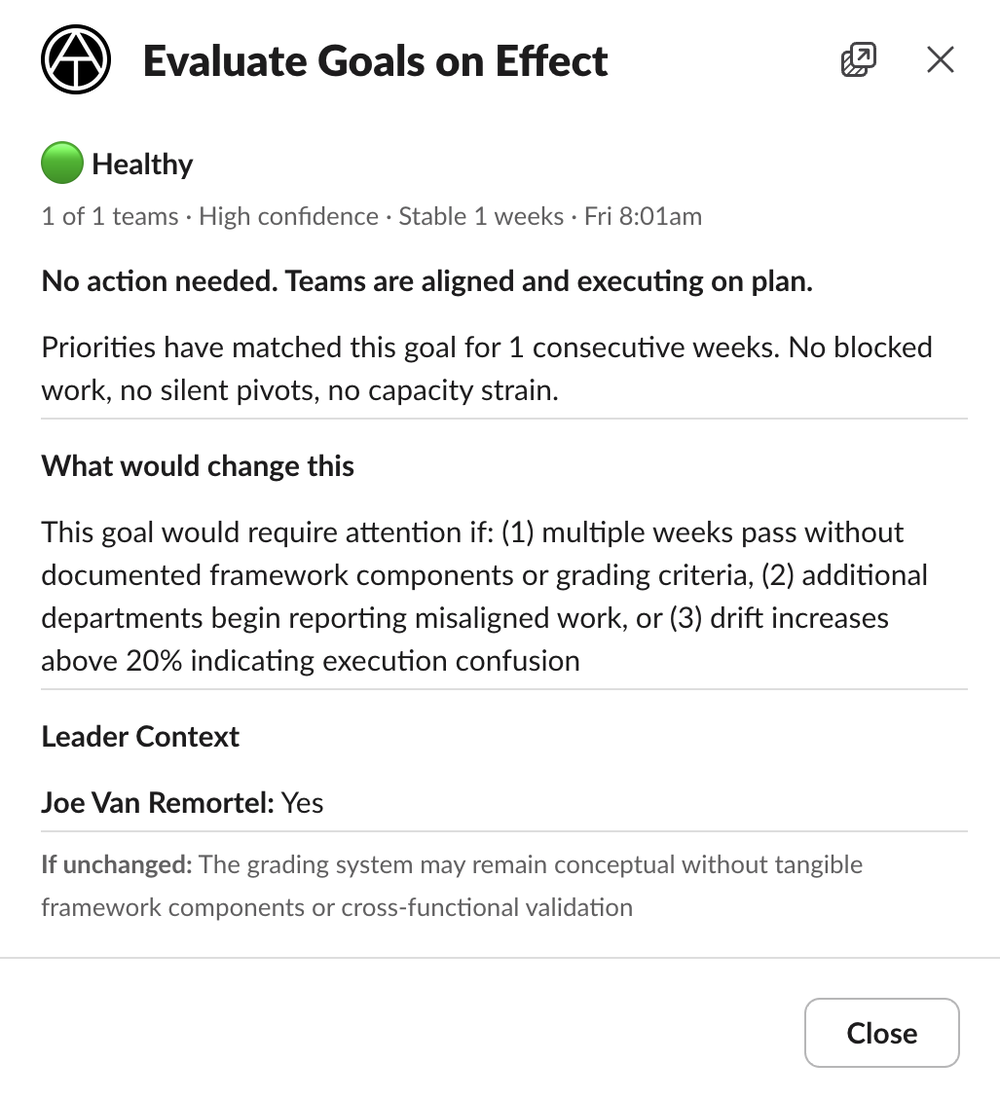
Lightweight weekly signals in Slack. The person doing the work approves what gets shared. No monitoring people.
Early warnings when work is drifting, priorities are unclear, or blockers are forming, before results are impacted. Every read carries its confidence, so you know how much weight it bears.
It tells me where the work is drifting, not how people feel. That's the difference from every survey we've run.
Head of People, Series C
Works alongside the tools you already use. Task tools and OKRs track work and goals; Alyn tracks whether the two still match.
Alyn does not read your message history. Its signal comes from short weekly check-ins that each person approves before anything is shared. No data files, no silent monitoring, and nothing is reported up that the person doing the work did not sign off on.
We were wary of anything reading Slack. The person doing the work approving what gets shared is what got it past my team.
VP Operations
Alyn is the product we incubated at TL Partners, our strategy practice. It is the product version of work we have done directly with dozens of technology companies, from hypergrowth startups to multibillion-dollar public ones. It is in design-partner pilots now.
Built by Thomas Igeme, a product leader at LinkedIn who went on to build the portfolio talent function inside a multi-billion-dollar software PE firm from a standing start.
See the practice behind it →Backing a portfolio or a fund? The fund-side version, the Strategy Alignment Audit and portfolio talent work, lives at TL Partners →
Where the work has drifted from the priorities leadership set, read across one or two senior vantage points and delivered as a picture you can act on. That is the Directional Audit, run by TL Partners: two weeks, fixed fee, about 20 minutes from each leader. For heads of people we run it as a two-vantage read, your view and your CEO's, so you can walk in with the gap between them.
See if a Directional Audit fitsThe first call is 25 minutes, to decide whether it is worth running at all.
Book 25 minutes, or send a note and we will come to you. A pilot is a fixed fee for one quarter, every team included, so broader coverage never costs you more. Exact in the first call, fixed once quoted: the one number here guaranteed not to drift.
Sizing the other side of it: the drift calculator prices what a quarter of misdirected work costs at your headcount.